
Workforce Rota, Clock-in Compliance and HR Analytics
A controlled workforce platform that replaces fragile rota spreadsheets with approved shifts, leave, locum governance, clock-in/out evidence and defensible hours-to-pay analysis.
The challenge
Rota planning depended on Excel workbooks with manually maintained formulas for expected hours, allocated hours and lost hours. Once a workbook was shared with end users, an altered formula or structure could invalidate the totals and force HR to recalculate the period. The organisation lacked one controlled version of the rota and one dependable audit trail for who changed, submitted or approved it.
Locum management created a second control gap. Non-permanent staff were brought in to cover shifts, but the reason for cover, the permanent employee gap and the locum's actual attendance were tracked manually. It was difficult to enforce the rule that a permanent employee should first complete 184 hours or be on approved leave before requesting locum work, and difficult to justify payment by comparing rota hours with verified clock-in and clock-out time.
What I built
I developed a browser-based rota and workforce-governance platform that synchronizes employee records and HRMIS leave, allocates coded shifts, calculates expected and assigned hours, and moves each monthly rota through submission and approval. Controlled reports replace distributed calculation workbooks with one rules-based source of truth.
The attendance layer connects the approved rota to clock-in/out evidence and highlights late starts, early departures, missed punches, overtime, shift mismatches and planned-versus-worked hours. The locum workflow captures why cover is required, checks permanent-employee hours or leave context, records the approved shift and compares the locum's scheduled hours with actual attendance before payment review.
How the organisation benefits
HR and department managers gain a common operating picture from workforce planning through attendance and payment review. Formula logic is protected in the application, rota versions and approvals are traceable, and exceptions can be analysed by facility, department, job or employee without rebuilding spreadsheets.
For locums, the system creates a defensible chain from the staffing gap and approval reason to the assigned shift, clock evidence and payable hours. This does not remove human authorization; it gives approvers better evidence to challenge unsupported cover, investigate non-attendance and reduce payment based only on scheduled rather than worked time.
Delivery reality
Workforce rules are rarely as simple as subtracting one timestamp from another. Overnight shifts cross calendar dates; leave, days off and public holidays change expected hours; missing punches are not automatically absence; and grace periods must be transparent and consistently applied. I translated these policies into visible calculation rules and retained correction and approval controls for genuine exceptions.
Adoption also required moving managers away from familiar Excel habits without losing the reports they relied on. The delivery approach therefore combined synchronized master data, phased rota approval, familiar matrix-style reports, user training and audit logs so the platform could become the controlled record rather than another parallel tool.
System narrative
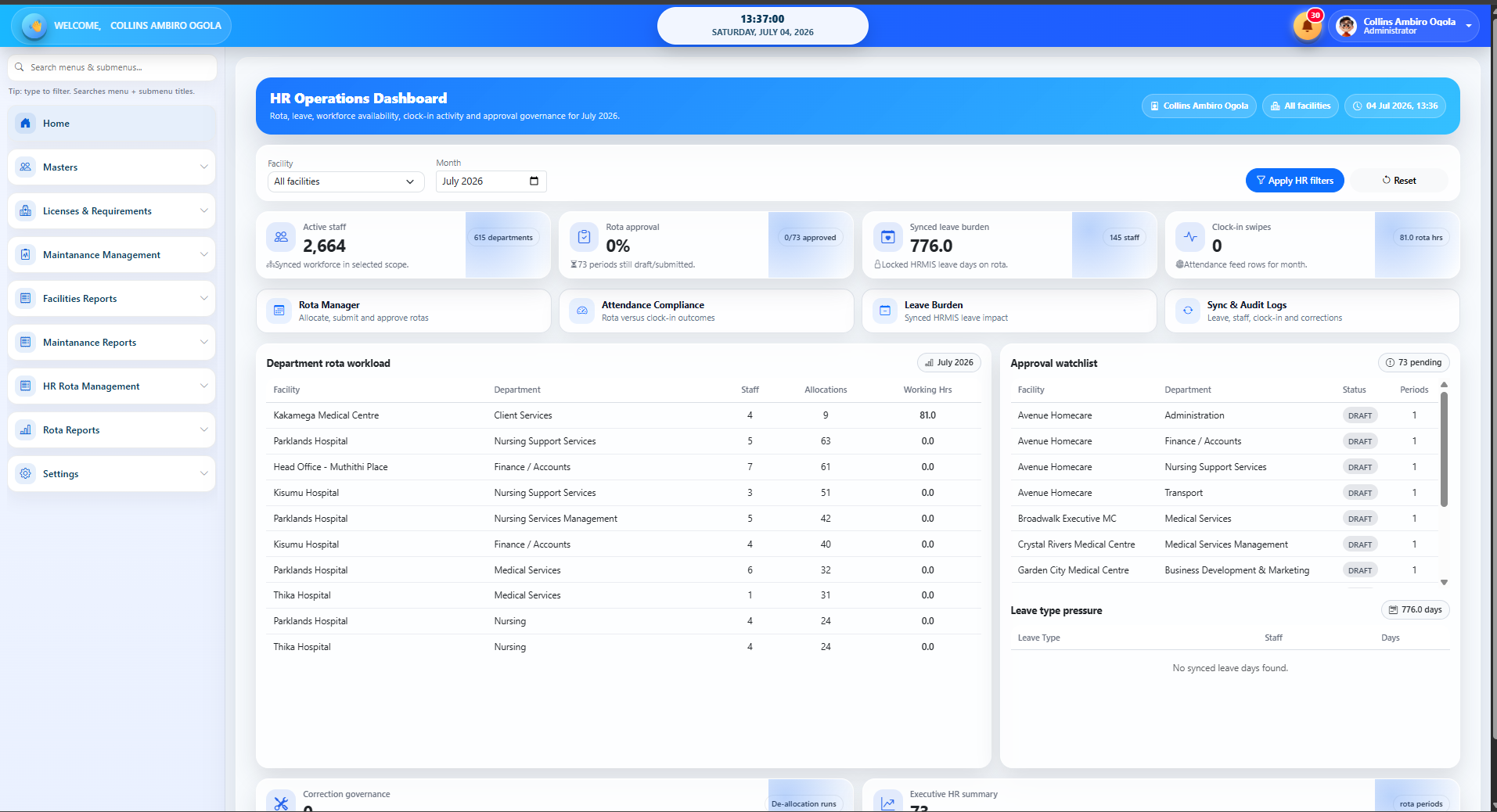
This executive view brings rota allocation, leave synchronization, approval status and clock-in evidence into one operating picture. HR leaders can filter by facility and month, see where rota periods remain unapproved and identify workload concentrations without assembling separate spreadsheets.
The dashboard is designed for action rather than display alone. It links managers to allocation, attendance compliance, leave burden and audit tools so that workforce exceptions can move directly into review and resolution.
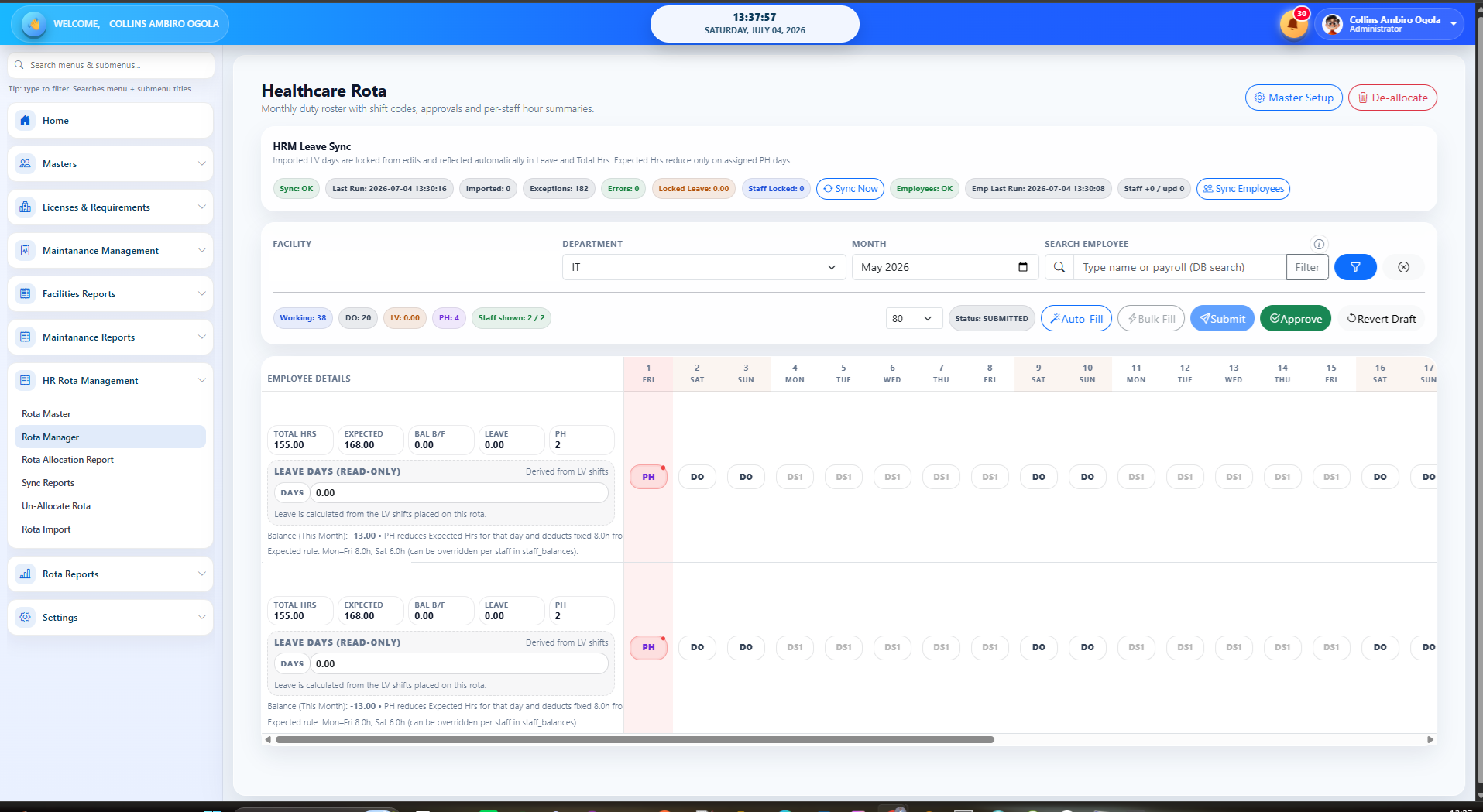
The allocation view supports the full monthly planning cycle: employee synchronization, HRMIS leave locking, shift assignment, total and expected hours, draft submission and approval. Public holidays, days off and leave remain visibly distinct from working shifts.
This structure gives HR and department managers a controlled way to plan coverage while retaining an auditable record of changes and approvals. Individual names are not exposed in this public evidence view.
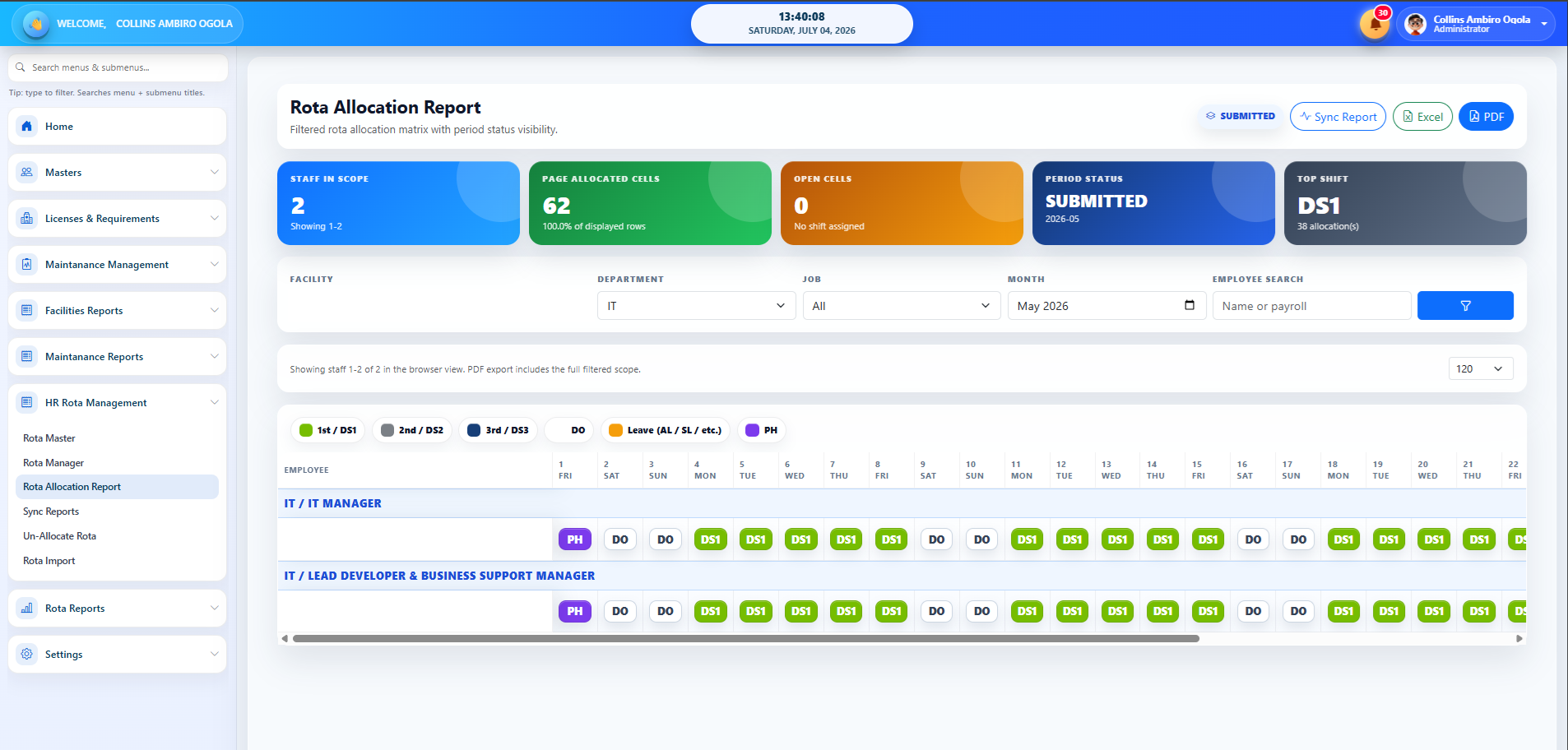
The allocation report translates a monthly rota into a management-ready matrix. Leaders can see whether every displayed cell is allocated, confirm period approval status and identify the dominant shift pattern at a glance.
Export options support PDF and spreadsheet workflows for formal review, while filters make the same evidence usable by facility, department, job and period.
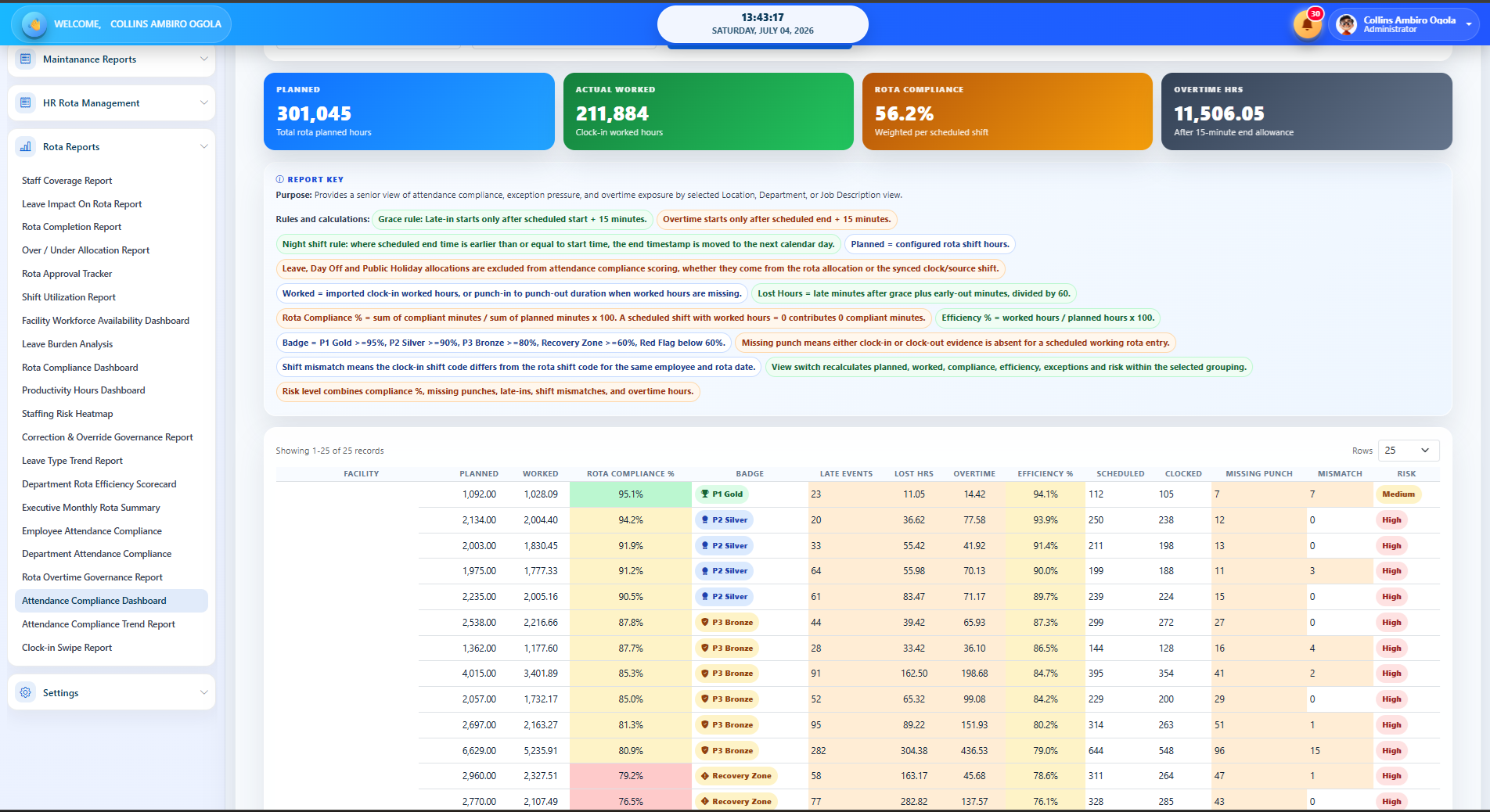
The facility-wide view converts clock activity into accountable HR measures: planned hours, actual worked hours, compliance, overtime, late events, missing punches, mismatches and risk. The calculation rules remain visible so leaders can interpret the result fairly.
This is where the rota becomes management intelligence. HR can compare facilities, prioritize high-risk exceptions and separate legitimate leave or non-working days from attendance failures.
More operational case studies.
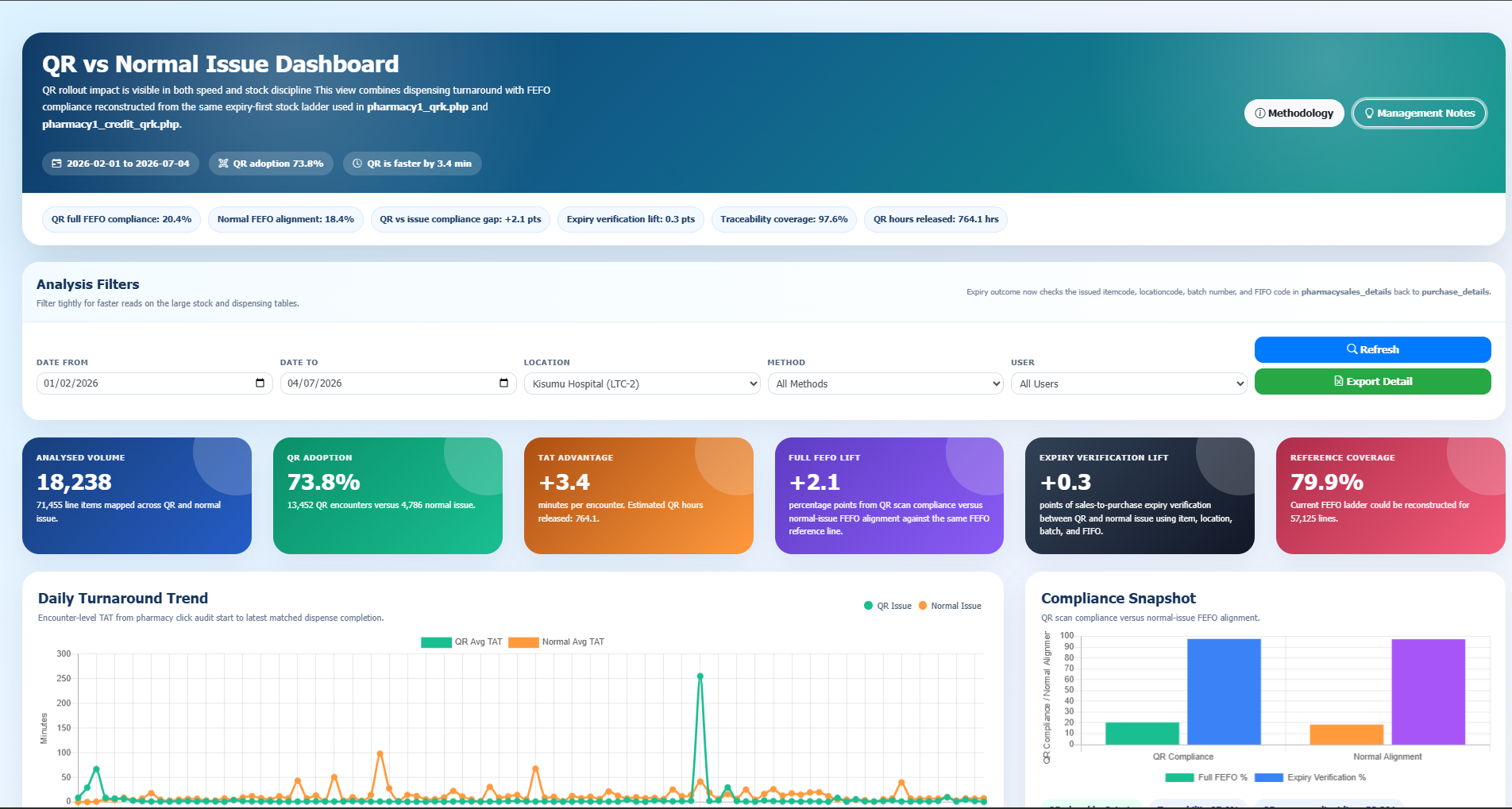
QR Scanned Pharmacy Dispensing and FEFO Compliance
A scan-controlled inventory workflow that embeds item, batch, expiry and FEFO checks from goods entry through stock taking, transfers, issues and returns.
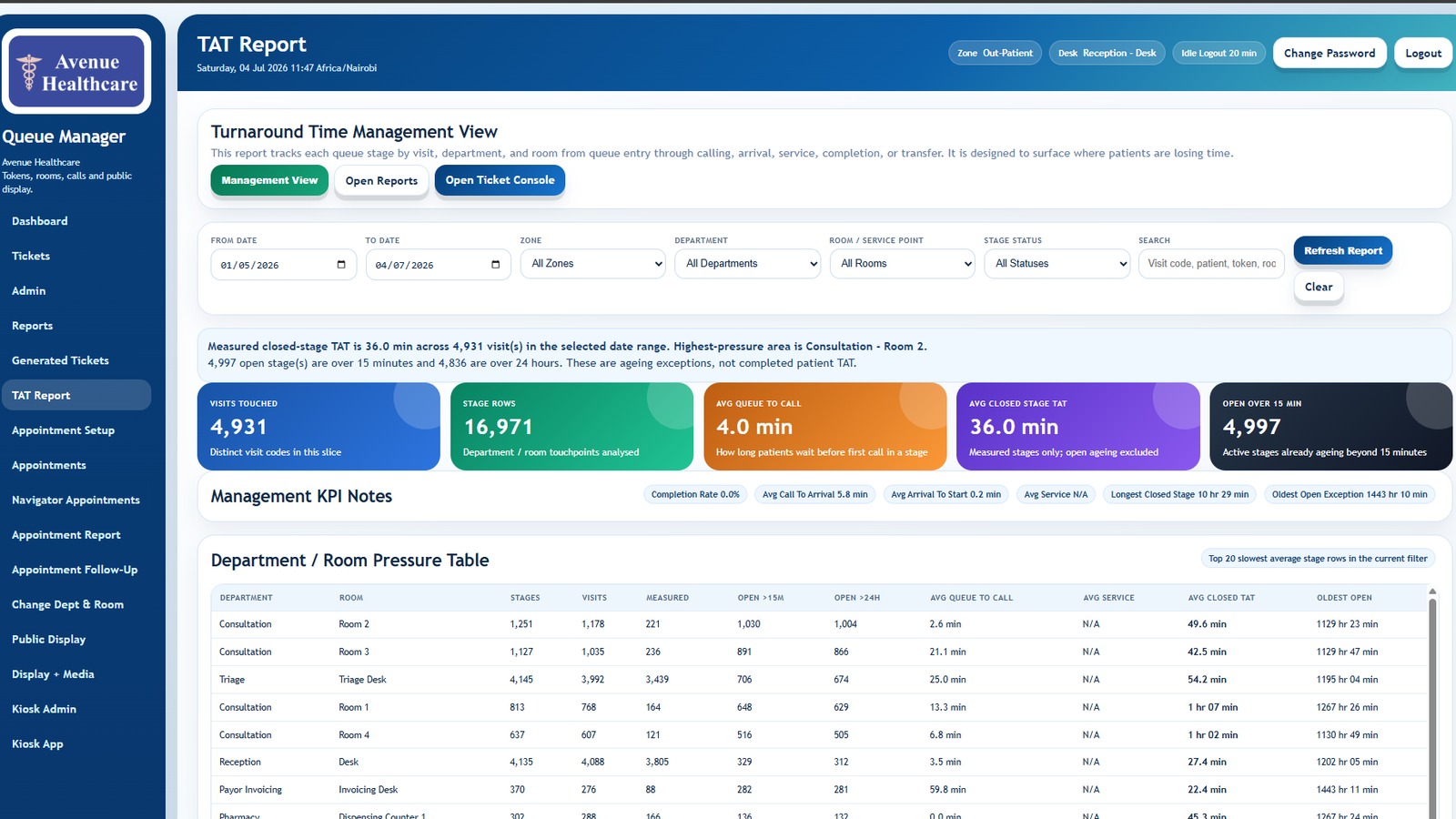
Queue Management and Turnaround Time Analytics
An HMIS-integrated queue and TAT platform built to make every outpatient stage visible and support the Door-to-Doctor-in-3-Minutes goal.