
QR Scanned Pharmacy Dispensing and FEFO Compliance
A scan-controlled inventory workflow that embeds item, batch, expiry and FEFO checks from goods entry through stock taking, transfers, issues and returns.
The challenge
Manual inventory handling depended heavily on staff visually reading labels, selecting batches and checking expiry dates in busy pharmacies and stores. Interruptions, look-alike packaging, split packs, poor shelf arrangement and incomplete expiry review created avoidable selection, expiry and recall risk. A fast click at the issue stage could look efficient while excluding the later cost of reconciliation, error correction and expiry cleanup.
Leadership also needed evidence that separated true scan-controlled compliance from normal issues reconstructed after the event. Without a traceable comparison by method, user, location, item, batch and expiry, it was difficult to govern adoption or identify where master-data and workflow gaps were weakening FEFO discipline.
What I built
I designed and developed QR functionality inside a legacy PHP 5.6 and MySQL hospital platform, extending it rather than requiring a costly replacement. The workflow captures item, batch, expiry, FEFO reference and location at goods entry, stock taking, inter-department transfers, issues and returns. It can warn, block, trace or report exceptions at the point of work.
I also built a management and audit layer that separates QR-controlled issues from normal issues, measures captured turnaround time, reconstructs expiry and FEFO references from stock and purchase records, and exposes adoption, traceability, reference coverage and non-compliant lines. The methodology explicitly distinguishes enforced QR compliance from retrospective manual alignment.
How the organisation benefits
The publication analysis for 1 March to 13 May 2026 covered 8,242 encounters and 34,000 issued lines at the QR/mixed site. QR adoption reached 66.9%; QR-controlled issues averaged 2.45 minutes compared with 7.07 minutes for manual issues within the same hospital; full FEFO compliance reached 45.7% versus 27.8% manual alignment, a 17.9-point lift; and traceability coverage reached 97.2%.
The value is broader than transaction speed. The workflow embeds safety and stock governance during routine work, improves recall readiness, makes near-expiry and reference gaps visible, and gives pharmacy, stores and leadership a daily evidence base for coaching, master-data correction and phased rollout. Later dashboard snapshots remain visible in the case-study evidence and show that performance continues to be monitored as the data window changes.
Delivery reality
The project had to make a mature legacy system perform modern scan-controlled inventory without disrupting daily dispensing. Master data needed validation; damaged labels, split packs and returns needed exception paths; printer or scanner downtime needed a fallback procedure; and partial adoption could leave traceability gaps even when the technology itself worked.
Delivery therefore combined executive sponsorship, Pharmacy and Stores ownership, IT first-line support, role-based training, spare-device planning and adoption monitoring by user and location. I treated dashboard interpretation with equal care: manual issue can appear faster when it skips validation, so leadership reporting presents visible speed alongside safety, FEFO, expiry and traceability controls.
System narrative
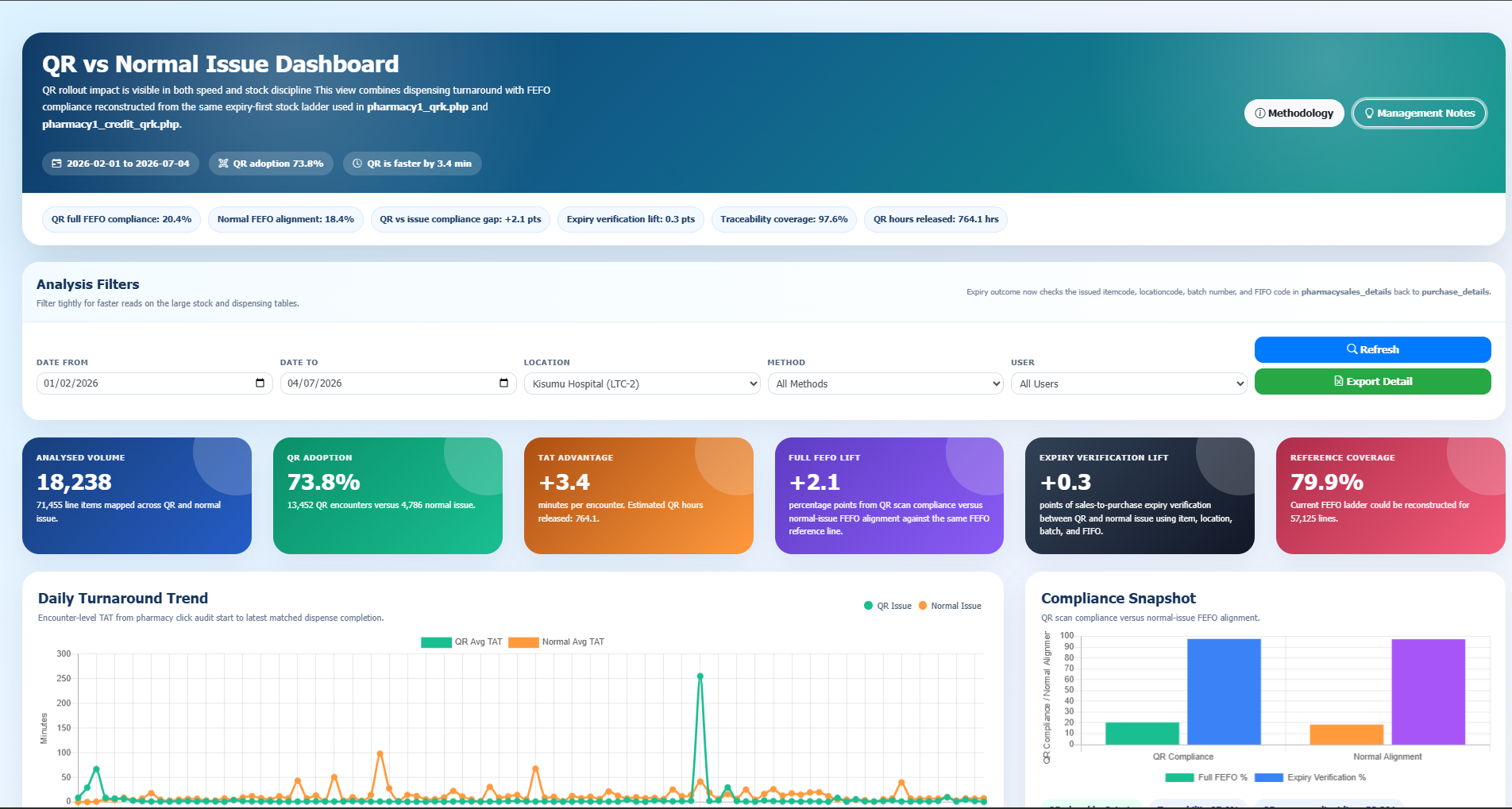
This management view brings speed and stock discipline into the same conversation. It separates QR and normal issue activity, presents the adoption rate and makes the turnaround-time difference visible without requiring leaders to inspect transaction-level records.
The compliance cards connect each headline back to the underlying audit logic. That gives pharmacy and procurement leaders a practical view of where QR controls are working, where references are missing and where rollout support should be focused.
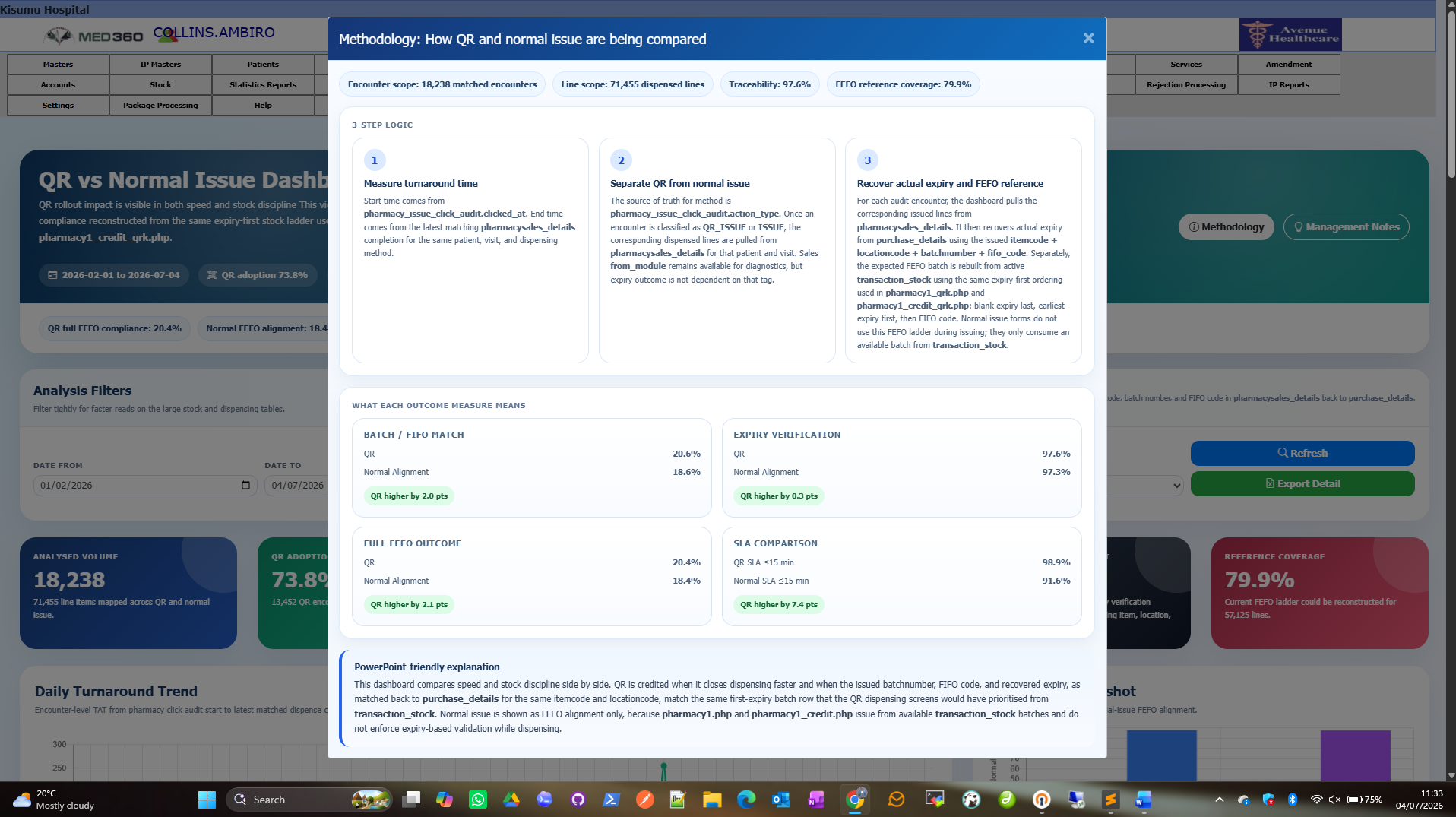
I designed the methodology view so that reported gains can be challenged and verified. It explains how dispense completion is matched, how actual expiry is recovered and why normal issue is described as retrospective alignment rather than enforced compliance.
This distinction protects the credibility of the dashboard. Management can use the measures in leadership discussions while technical and pharmacy teams retain a clear audit trail back to the operational records.
More operational case studies.
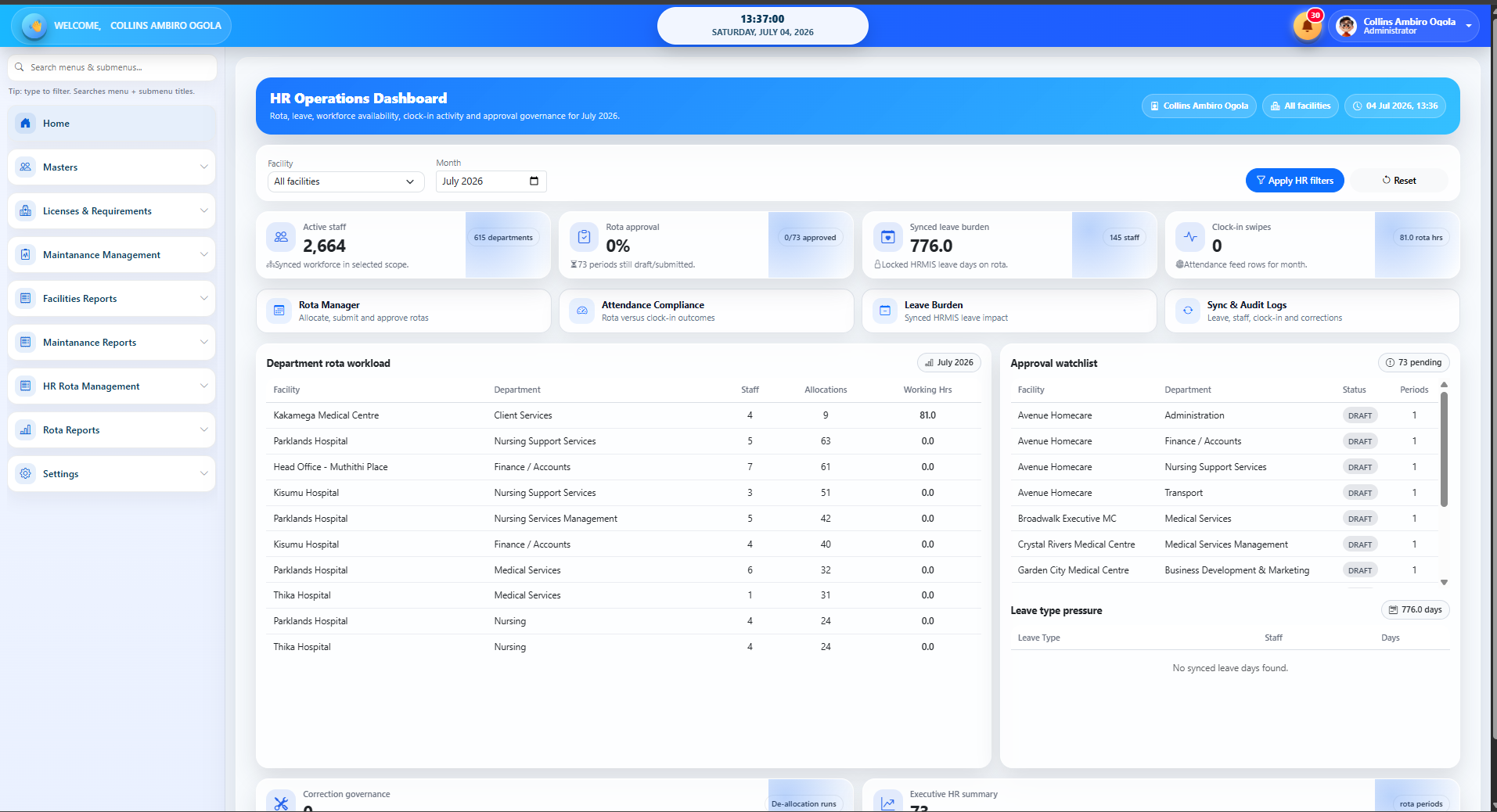
Workforce Rota, Clock-in Compliance and HR Analytics
A controlled workforce platform that replaces fragile rota spreadsheets with approved shifts, leave, locum governance, clock-in/out evidence and defensible hours-to-pay analysis.
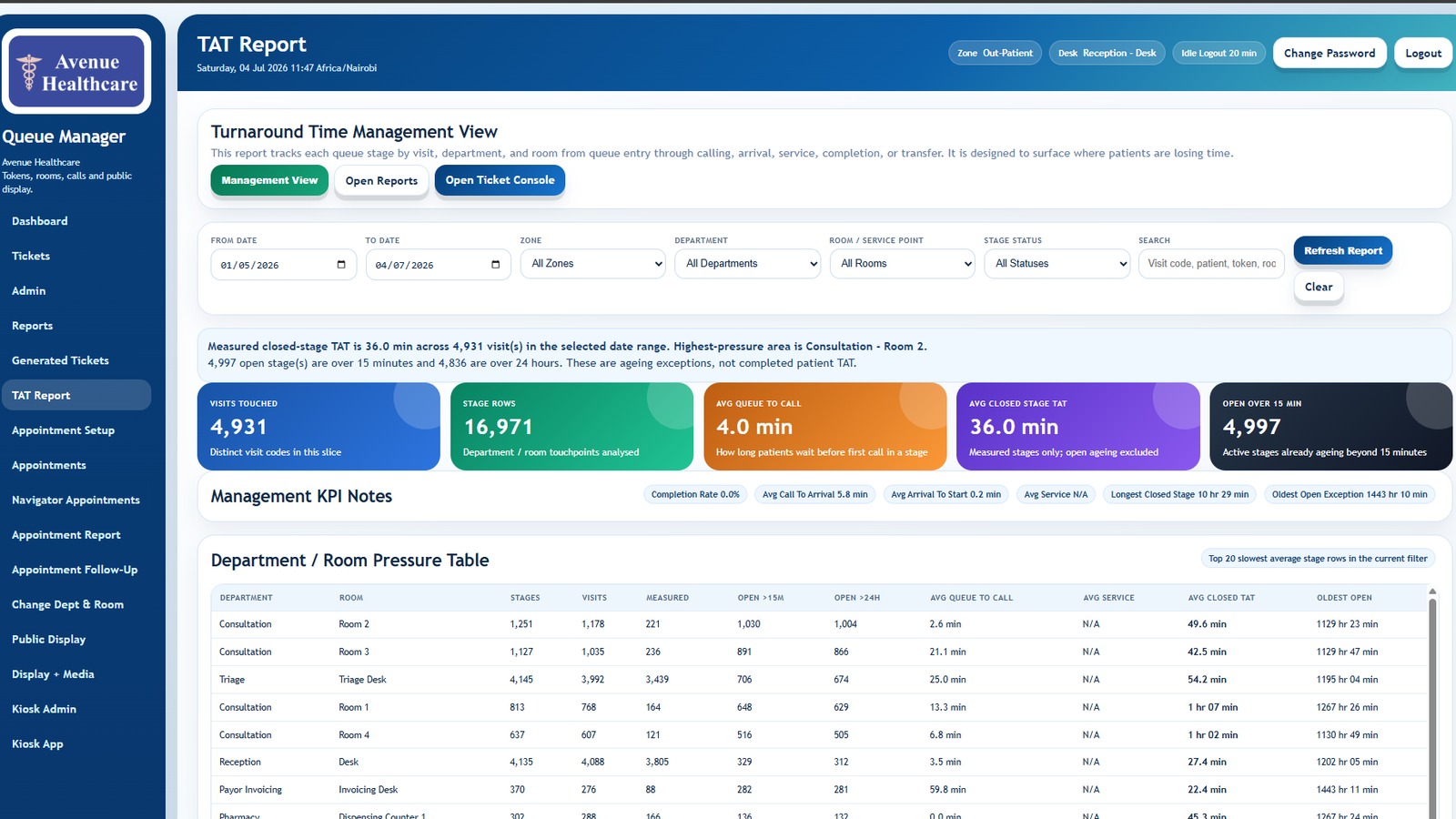
Queue Management and Turnaround Time Analytics
An HMIS-integrated queue and TAT platform built to make every outpatient stage visible and support the Door-to-Doctor-in-3-Minutes goal.