
Hospital Intranet and Clinical Handover
A modular internal operations hub for doctor handover, nursing continuity, discharge coordination and hospital-wide collaboration.
The challenge
Doctor and nursing handovers relied on fragmented notes, verbal memory, spreadsheets and informal messages. Important context could be difficult to find at shift change, while high-acuity cases, incomplete actions and ownership of follow-up were not consistently visible across teams. Nursing leadership also lacked a consolidated view of ward workload, risk and handover completeness.
Discharge exposed the same coordination problem across a longer chain. Doctors, nursing, pharmacy, finance and billing each owned part of the process, but without shared blocker and checklist visibility it was difficult to know which step was delaying final clearance and bed release.
What I built
I built a role-aware hospital intranet that acts as a shared operations layer rather than a static noticeboard. It combines patient management, OP doctor handover, structured nursing handover, Nursing Directorate views, high-acuity flags, discharge checklists, approvals, audits, knowledge sharing and departmental modules.
The handover views prioritize risk, service coverage, outstanding actions and shift ownership. The discharge workflow exposes open cases, responsible departments, checklist progress, overdue steps and cases ready to finalize, giving teams one place to coordinate work that previously crossed several informal channels.
How the organisation benefits
Clinicians begin a shift with a clearer picture of priority cases, outstanding actions and ownership. Nurses can record ward activity and acuity in a consistent structure, while the Nursing Directorate gains better visibility of workload, escalation needs and gaps in handover completeness.
For discharge, shared blocker visibility supports earlier intervention and clearer patient communication. The system creates an auditable coordination record across departments and reduces dependence on individuals remembering who was expected to act next.
Delivery reality
Clinical software must improve continuity without becoming another documentation burden. I worked around this by using role-based screens, concise required information, existing workflow language and views that return immediate value to the person entering the data. Adoption required engagement with both medical and nursing teams because the same record must remain meaningful across professional boundaries.
Privacy was a delivery requirement, not an afterthought. Access is role controlled, public portfolio evidence is redacted, and the system is designed to surface operational signals without exposing more clinical detail than each user needs.
System narrative
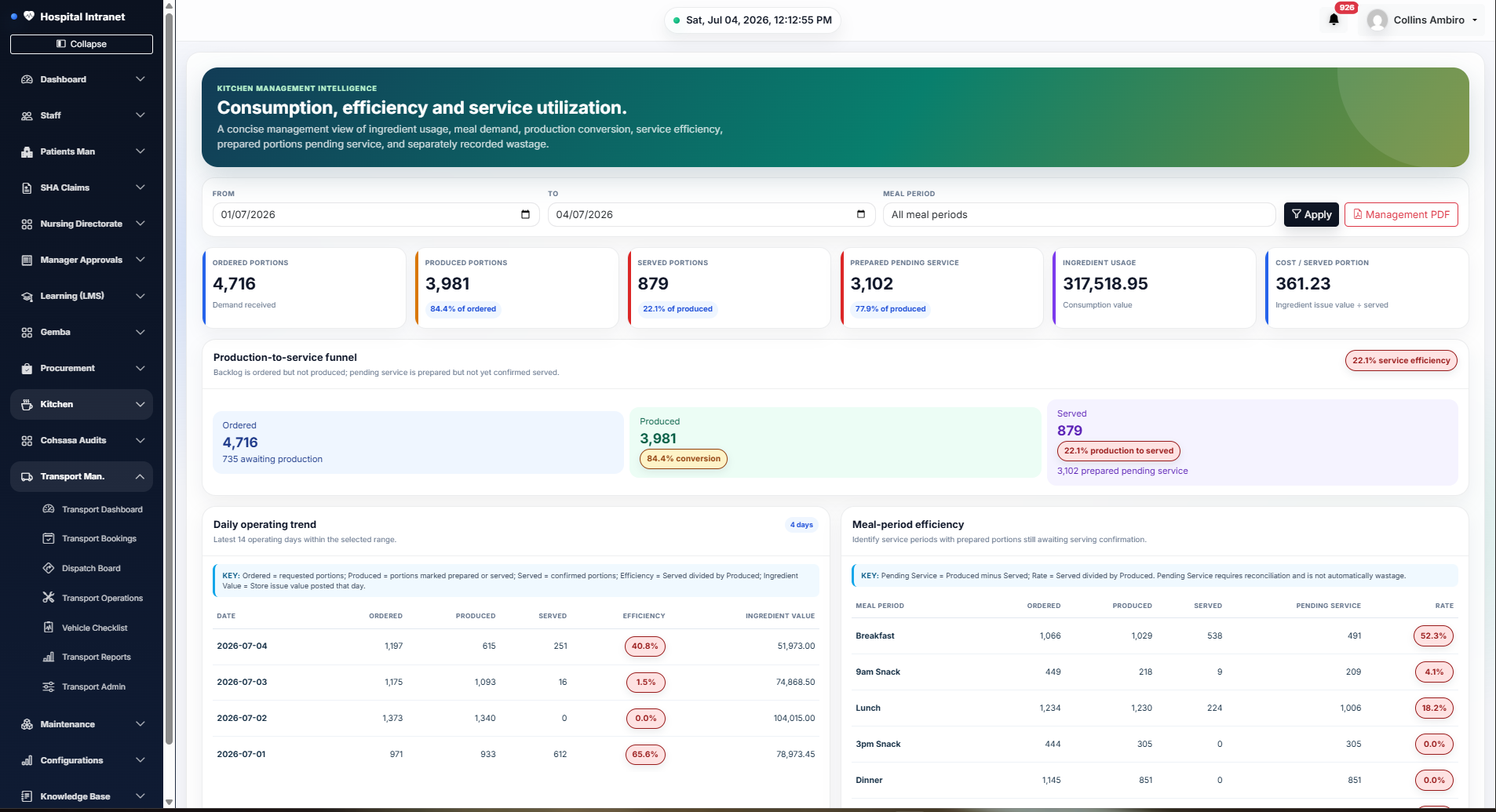
The intranet acts as a shared operating layer rather than a static noticeboard. Staff can reach clinical, nursing and non-clinical workflows through one role-aware internal environment.
Bringing these modules together reduces fragmented spreadsheets and informal communication. It also gives leadership a consistent foundation for approvals, reporting, handover and departmental accountability.
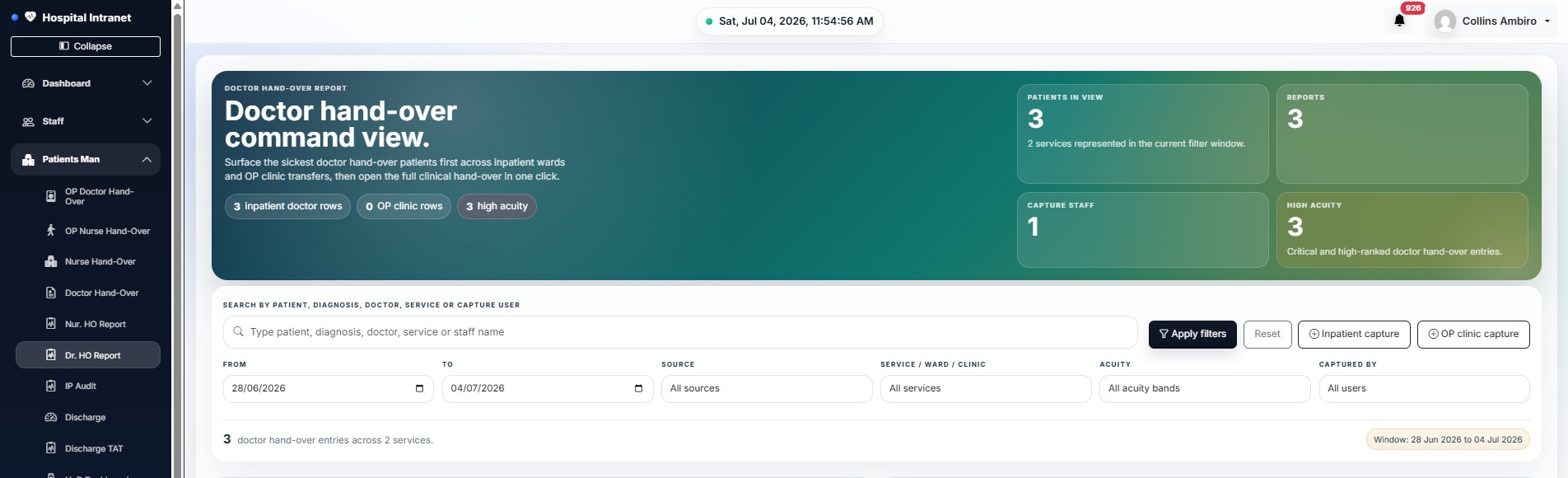
The command view surfaces the sickest patients and the services represented in the selected handover window before a clinician opens individual records. This helps the next shift orient quickly around risk and ownership.
The screen supports structured continuity rather than verbal memory. High-acuity flags and service snapshots give clinicians a reliable starting point for follow-up and escalation.
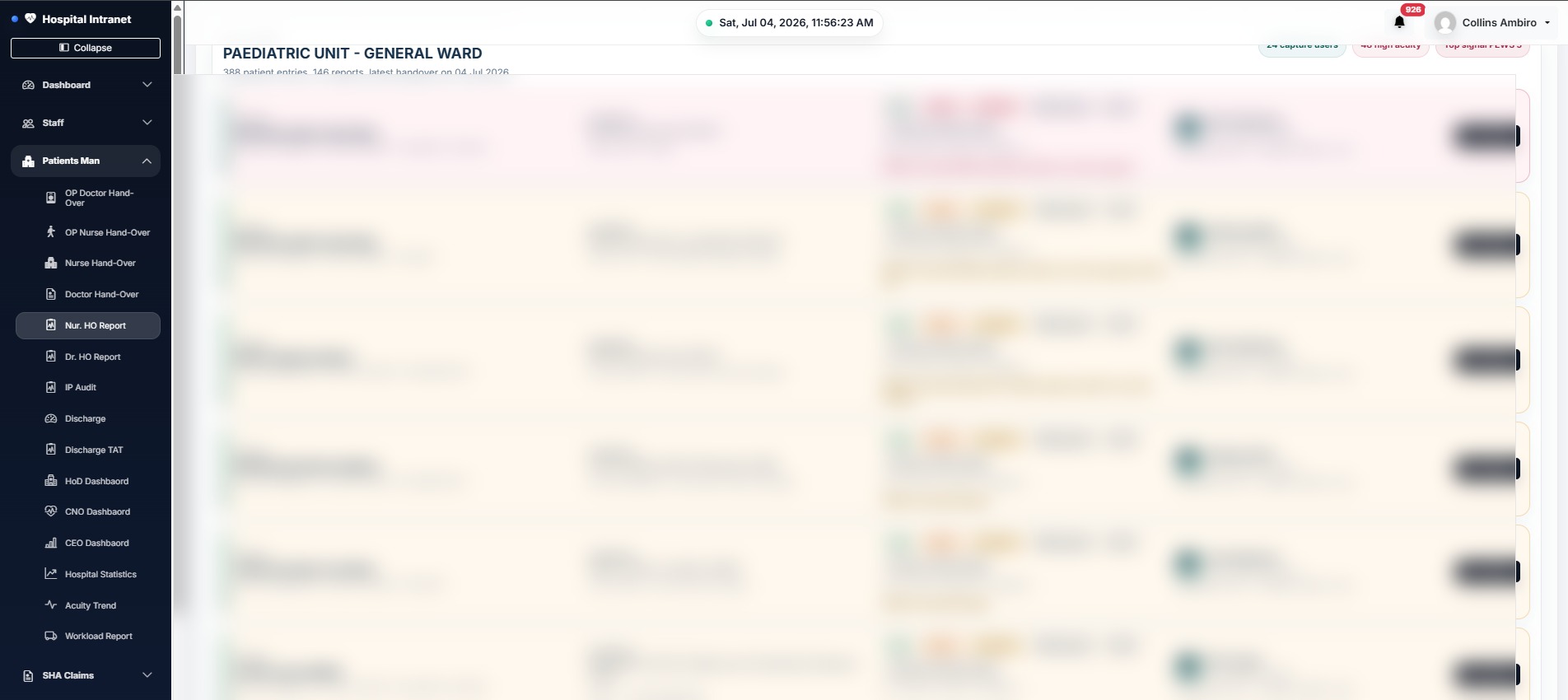
Nursing is central to the continuity story. This redacted example shows how a ward-level view can organize acuity, handover completeness and risk signals while protecting patient privacy in a public portfolio.
Digitizing nursing handover gives the Nursing Directorate a more consistent view of workload and escalation needs, and strengthens accountability between shifts without publishing sensitive clinical details.
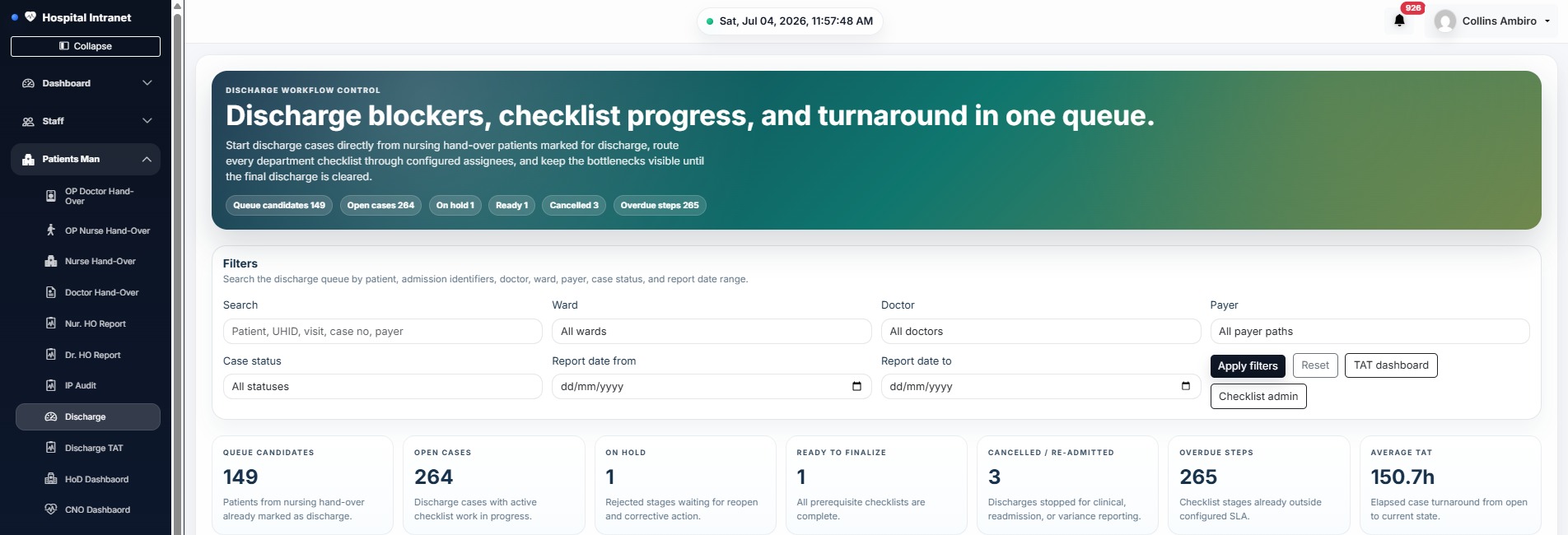
The discharge view treats delay as a cross-department workflow. It shows open cases, checklist ownership, overdue steps and cases ready to finalize so that the right team can intervene.
This supports faster bed release and clearer patient communication. Finance, pharmacy, nursing, doctors and billing teams can see which configured step is holding the path to final clearance.
More operational case studies.
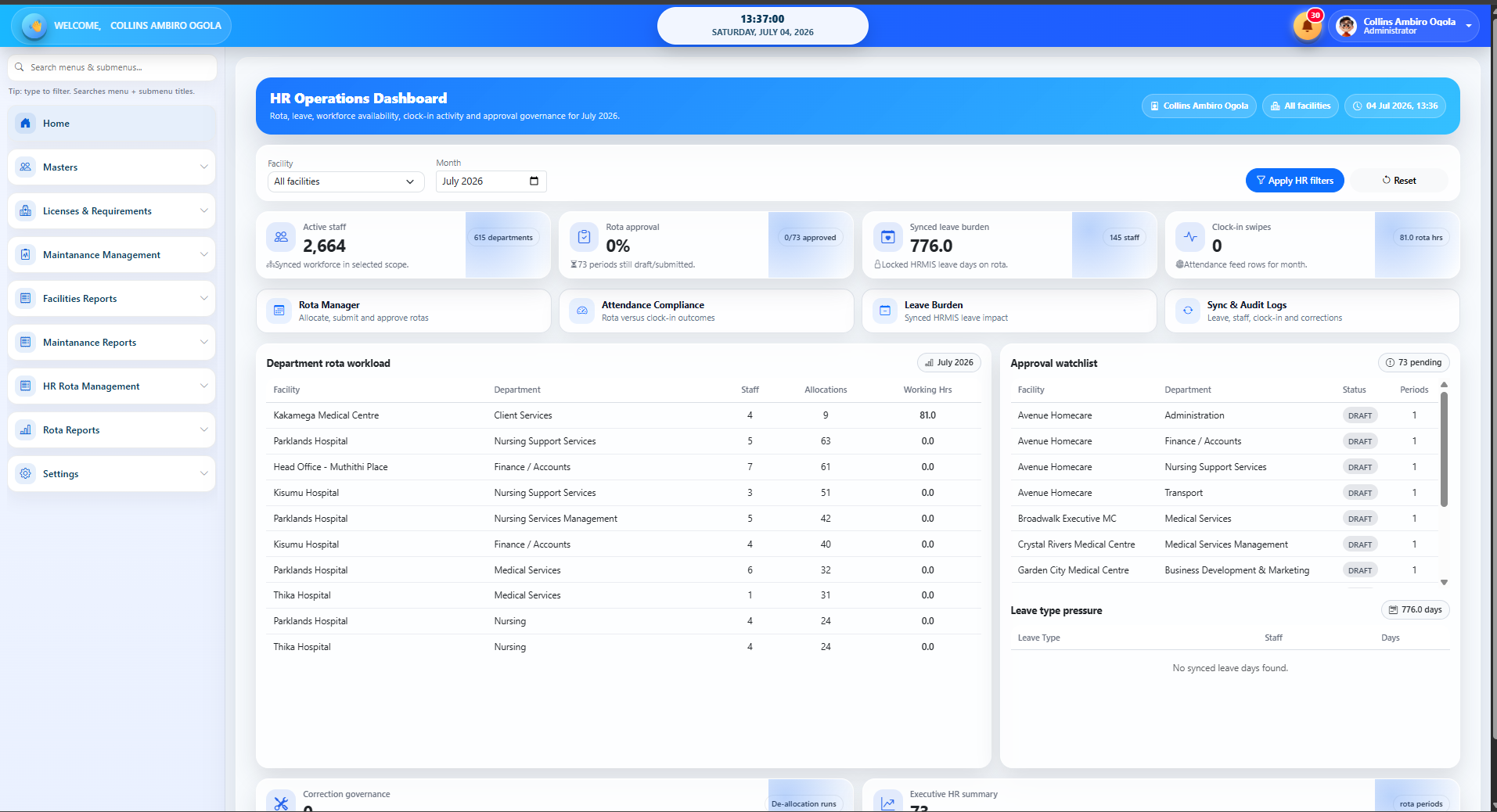
Workforce Rota, Clock-in Compliance and HR Analytics
A controlled workforce platform that replaces fragile rota spreadsheets with approved shifts, leave, locum governance, clock-in/out evidence and defensible hours-to-pay analysis.
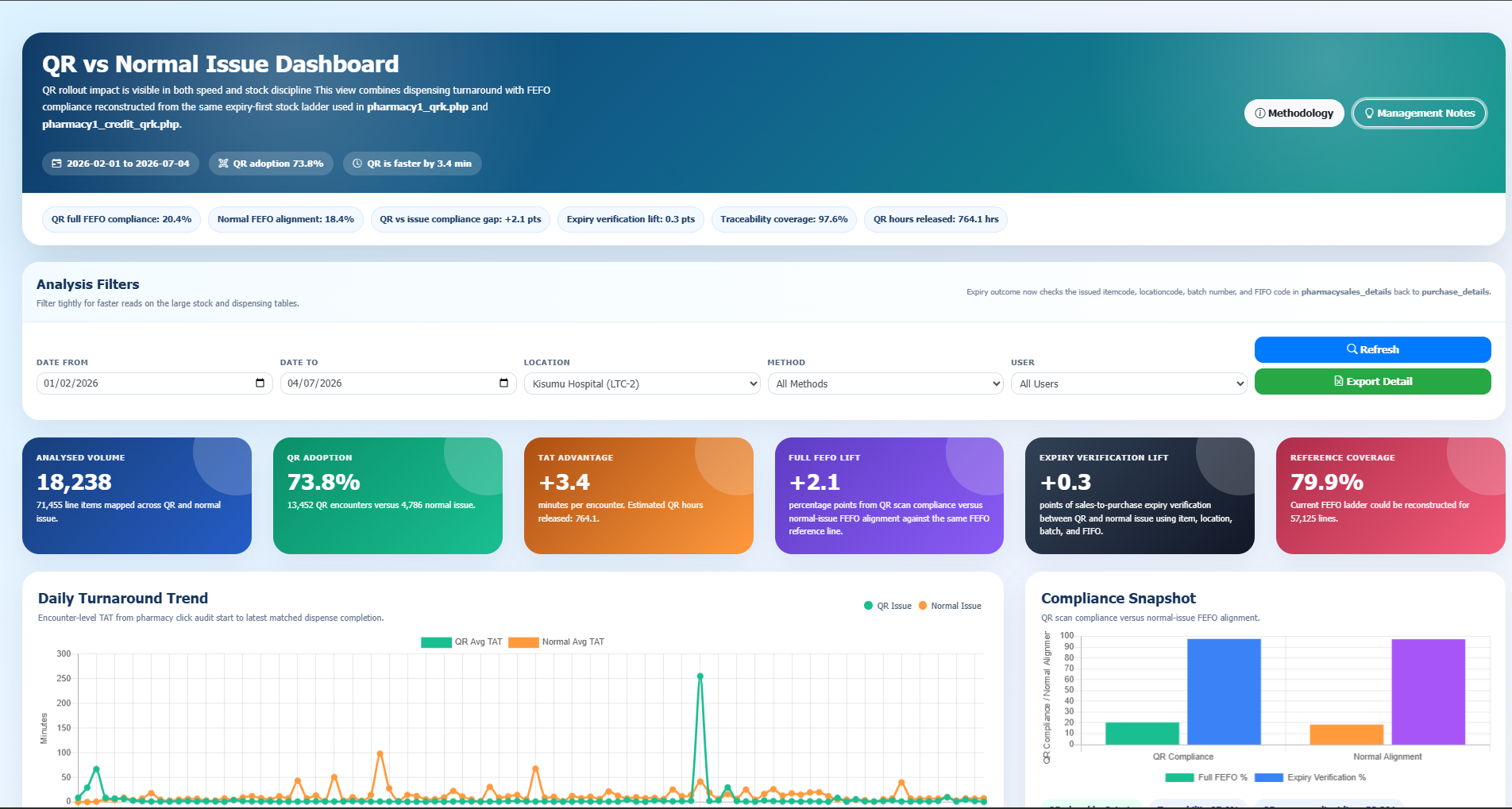
QR Scanned Pharmacy Dispensing and FEFO Compliance
A scan-controlled inventory workflow that embeds item, batch, expiry and FEFO checks from goods entry through stock taking, transfers, issues and returns.