
Enterprise Data Warehouse and Power BI Decision Management
Avenue Group data from clinical, financial and HR systems brought into a governed warehouse and translated into decision-ready Power BI views.
The challenge
Avenue Group had accumulated more than 40GB of compressed operational data across its healthcare information, finance and HR systems, but much of that value was waiting to be harvested. Leaders needed timely visibility of activity, revenue, costs, inventory, patient experience and facility performance; manually assembled reporting arrived too slowly and did not always support drill-down across the dimensions needed for action.
The challenge was not simply to draw charts. Different systems used different structures and standards, data quality varied, and sensitive clinical and commercial information required careful governance. The organisation needed a consistent model that could move decision-making from delayed snapshots toward reliable, repeatable and more agile management evidence.
What I built
I designed and developed the Power BI decision layer and worked across the delivery of an enterprise data warehouse integrating HMIS, financial and HR data. My role connected business-objective definition and stakeholder requirements to dimensional modelling, source extraction, cleansing, transformation, loading, validation, scheduled refreshes and monitoring. I organised encounters, billing, payor activity, consumables and feedback against consistent dimensions such as facilities, services, providers and time.
I built Power BI dashboards for hospital activity and KPIs, daily outpatient and revenue performance, specialty contribution, pharmacy and procurement patterns, fixed-fee scheme utilisation, credit-billing journeys, management accounts, patient feedback and NPS, and project tracking. I designed the reports with role-appropriate drill-down so executives and operational managers could move from a group-level signal to the facility, department or process requiring attention.
How the organisation benefits
The dashboards I built gave hospital and clinic managers real-time visibility across consultation, laboratory, imaging, inpatient care and theatre. The implementation recorded theatre utilisation of 6-7%, expanded specialty capture from zero to 423 mapped specialists and improved laboratory conversion from 33% to 35%. By combining prior-year performance, budget and monthly forecasts, the daily outpatient and revenue views supported earlier intervention and helped surface opportunities in laboratory insourcing, specialty clinics and referral planning.
My pharmacy and financial views connected buying, selling, claims and debtor workflows to management action. Pharmacy margin moved from 39% to 44% alongside stronger procurement and product-availability decisions. Fixed-fee scheme visibility supported a shift from a KSh 26 million write-off position to 10% profit. Credit-billing tracking reduced debtor turnaround from 14 days to 4 days and supported movement from a 2.5% rejection rate toward a target below 1%.
I also made physician contribution, specialty and space allocation, package pricing, ancillary-service use and management-account trends easier to compare. The live NPS dashboard exposed feedback, scores and response rates by location and department so customer-experience teams could identify and address concerns sooner. Because these dashboards contain sensitive organisational data, I present the aggregated outcomes here without screenshots.
Delivery reality
The hardest work sat below the visual layer: agreeing definitions, reconciling source systems, correcting duplicates and inconsistent formats, validating loaded data against source records and deciding who should see which level of detail. Data governance, privacy and role-based access were essential to earning trust in the result.
Adoption also required translation. Executives, operational owners and technical teams approached the same measure from different perspectives, so I helped connect business questions to data structures, test scenarios and dashboard behaviour. The dashboards were validated with end users and refined through feedback so they became working management tools rather than technically impressive reports that nobody used.
More operational case studies.
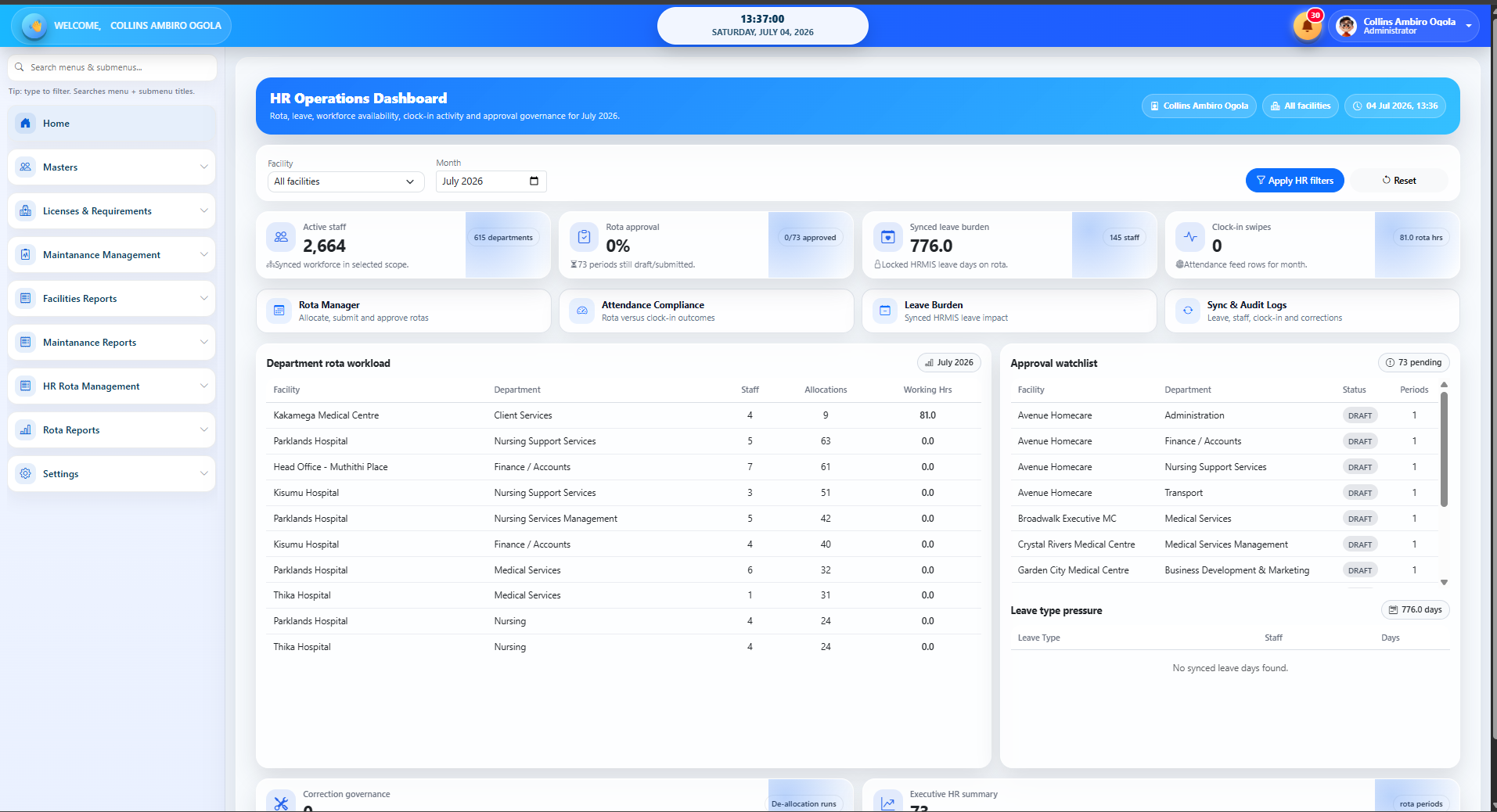
Workforce Rota, Clock-in Compliance and HR Analytics
A controlled workforce platform that replaces fragile rota spreadsheets with approved shifts, leave, locum governance, clock-in/out evidence and defensible hours-to-pay analysis.
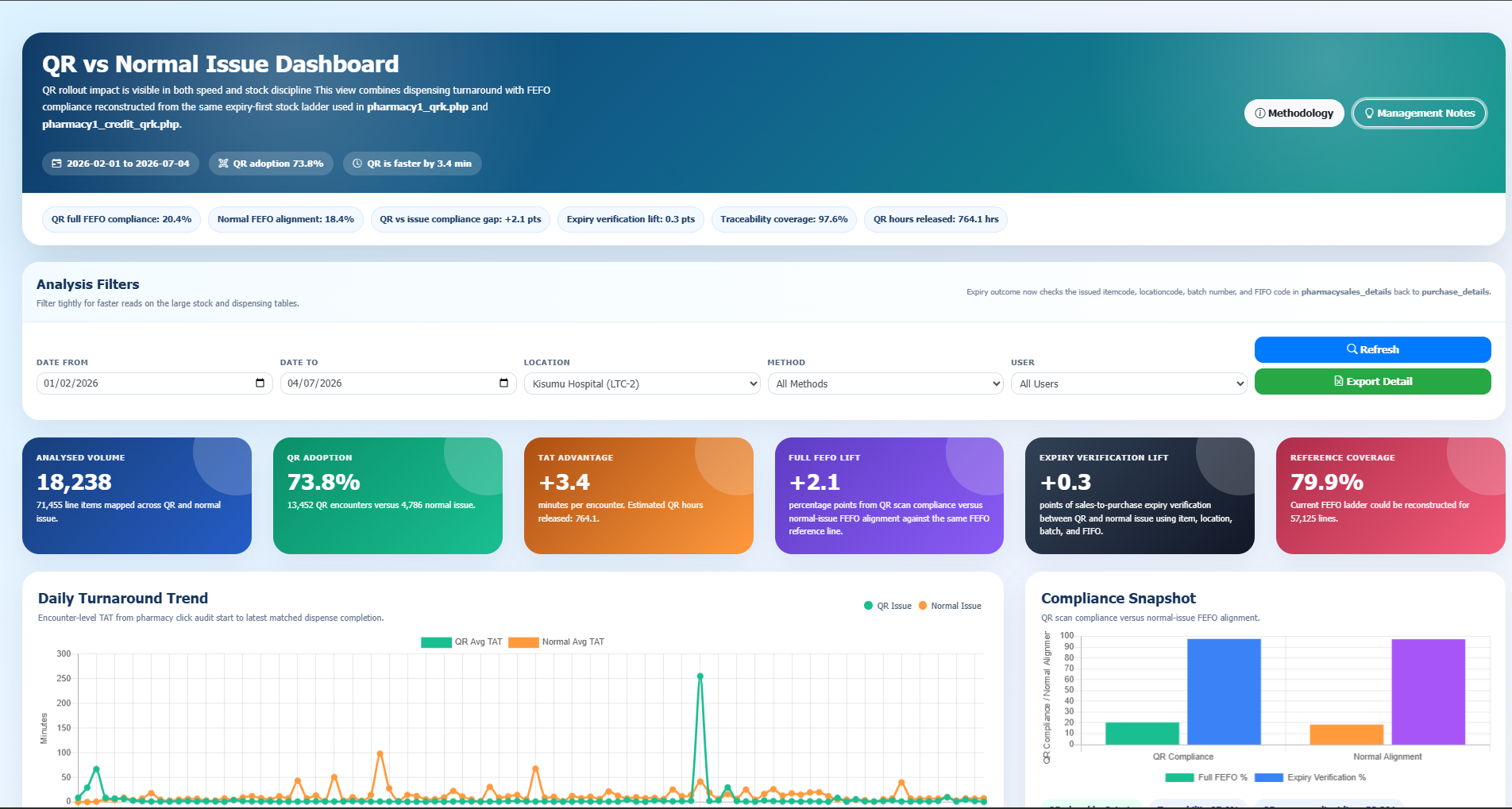
QR Scanned Pharmacy Dispensing and FEFO Compliance
A scan-controlled inventory workflow that embeds item, batch, expiry and FEFO checks from goods entry through stock taking, transfers, issues and returns.